



What This Page Covers
- Common failure-to-yield accidents, including crashes at intersections, highway merges, crosswalks, four-way stops, and traffic signals.
- Why left-turn collisions can be especially dangerous and how investigators may determine fault.
- Kentucky right-of-way rules involving motorists, pedestrians, and emergency vehicles.
- Evidence that may help support a claim, such as photographs, witness information, police reports, and medical records.
- How Kentucky’s no-fault insurance and comparative negligence laws may affect an injured person’s claim.
Why This Matters
- A driver’s failure to yield can cause serious injuries, substantial medical expenses, lost income, and long-term difficulties for an entire family.
- Insurance companies may question who had the right of way or argue that more than one person contributed to the crash.
- Evidence from the scene can help establish how the collision occurred and who may be legally responsible.
- Prompt medical care protects your health and documents injuries that may not produce immediate symptoms.
- Understanding your rights can help you avoid mistakes that could weaken your ability to pursue compensation.
Key Actions You Can Take
- Seek medical attention promptly, even if your symptoms initially seem minor.
- Report the accident and obtain the responding officer’s name, badge number, and police report information.
- If it is safe, photograph the vehicles, damage, traffic signals, signs, skid marks, weather conditions, and surrounding roadway.
- Exchange information with the other driver, collect witness contact details, and avoid admitting fault or speculating about what happened.
- Speak with a Kentucky car accident attorney before giving a detailed statement to an insurance adjuster. Rhoads & Rhoads offers a free consultation to explain your options without requiring an immediate commitment.
Failure-to-yield accidents represent some of the most common and dangerous types of car accidents on Kentucky roadways. When a driver fails to yield the right of way to another vehicle or pedestrians, the consequences can be catastrophic. These accidents frequently occur at intersections and when vehicles approach merging lan

es on highways throughout Kentucky.
Understanding your legal rights after a yield violation accident is crucial for protecting your interests. Kentucky’s traffic laws clearly establish when drivers must yield the right of way, and violations of these laws can result in severe liability for the at-fault driver.
If you’ve been injured in an accident, consulting with an experienced car accident lawyer can help you understand your rights and pursue appropriate compensation for your injuries under Kentucky law. Call 888-709-9329 for a free consultation today.
Failure To Yield Accident Scenarios
Failure to yield accidents can occur in numerous ways throughout Kentucky’s roadways. Understanding these everyday situations can help drivers recognize when they must yield the right of way to prevent serious car accidents.
Common Failure To Yield Scenarios Include:
Intersection Accidents: Drivers fail to yield at stop signs, creating dangerous conditions when two vehicles enter an intersection simultaneously- Highway Merging: Drivers ignore yield signs when merging onto highways, causing collisions with other cars that have the right of way
- Pedestrian Crosswalks: Drivers fail to yield to pedestrians in crosswalks or ignore walk signals
- Emergency Vehicle Incidents: Emergency vehicles responding to calls face particular risks when other vehicles fail to yield the right of way.
These scenarios demonstrate how yield violations can affect various road users, from motor vehicle operators to pedestrians and emergency responders.
Left Turns Are the Most Dangerous
 Left-turn accidents represent the most dangerous type of failure-to-yield collision in Kentucky. When a driver attempts to turn left without properly yielding to traffic that has the right of way, severe car accidents frequently result.
The physics of these collisions often produce significant trauma, as vehicles typically strike each other at relatively high speeds with substantial force.
Kentucky law requires drivers making a left turn to yield the right of way to oncoming traffic and pedestrians. However, many drivers misjudge the speed and distance of approaching vehicles, leading to devastating accidents.
Determining who is at fault in left-turn accidents often involves analyzing traffic signals, witness statements, and physical evidence at the accident scene. An experienced personal injury lawyer can help accident victims navigate these complex cases and establish liability against the at-fault driver under Kentucky law.
Right of Way Rules
Kentucky’s right-of-way rules establish clear guidelines for determining which driver or vehicle has the right of way. Understanding these traffic laws is essential for both preventing accidents and deciding who’s at fault when an accident happens. The Kentucky Transportation Cabinet has established comprehensive regulations that govern right-of-way situations throughout the state.
Key Right of Way Rules:
 Four-Way Stops: The vehicle that arrives first has the right of way. When vehicles approach simultaneously, the driver on the right has priority.
- Traffic Signals: Traffic signs override general rules. Drivers are required to yield to vehicles that have a green light.
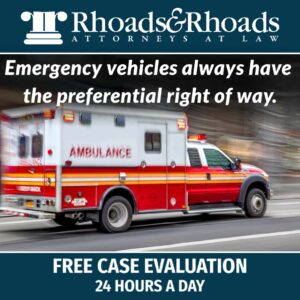
- Emergency Vehicles: Emergency vehicles always have the preferential right of way, and all other vehicles must yield when police cars, ambulances, or fire trucks approach with lights and sirens activated.
- Pedestrian Rights: Pedestrians generally have the right of way in marked crosswalks and at intersections with walk signals.
When drivers fail to follow these right-of-way rules, they become liable for any resulting accident and injuries. Local authorities and Kentucky State Police regularly investigate such cases to determine which driver violated applicable laws.
Failure To Yield as a Form of Aggressive Driving
 Failure to yield the right of way often represents a form of aggressive driving that creates an immediate hazard for other drivers, pedestrians, and emergency vehicles.
When drivers deliberately ignore right-of-way rules or make reckless decisions about yielding, they endanger everyone sharing the road. This aggressive behavior contributes to thousands of car accidents annually throughout Kentucky.
Aggressive drivers who fail to yield may also engage in other dangerous behaviors, such as speeding, following too closely, or ignoring traffic signs.
These patterns of behavior demonstrate a disregard for the traffic safety of other road users. When such cases result in accidents, the aggressive driver typically bears full responsibility under Kentucky law for resulting injuries, property damage, and other losses suffered by victims.
Evidence You Should Collect at the Accident Scene
immediately after an accident is crucial for protecting your rights and building a strong case for compensation. When safe to do so, document the accident scene thoroughly to strengthen your potential claim and ensure your personal injury protections are upheld.
Essential Evidence To Collect:
 Photographic Evidence: Take clear photos of vehicle damage, skid marks, the surrounding intersection, traffic signs, and any other visual indicators of what happened when the accident occurred.
- Contact Information: Exchange names, phone numbers, and insurance details with other drivers and any witnesses.
- Emergency Response Documentation: Make note of the responding police officer’s name, badge number, and the case or incident number they provide.
- Official Reports: Request a copy of the police report, which will help establish factors like intersection violations
- Traffic Conditions: Record the weather, lighting, and safety conditions at the time of the crash to provide helpful context later.
Medical documentation is equally important. Many car accident injuries may not manifest symptoms right away, but prompt medical attention creates a record that links your health issues to the incident.
This step is vital if you decide to opt out of Kentucky’s no-fault system and pursue a personal injury claim. An example of this would be a neck injury that worsens over time and requires ongoing treatment.
Our team offers a free case evaluation to help you understand your rights. When a right-of-way violation leads to a crash at an intersection, substantial evidence can be the key to recovering full compensation.
What You Shouldn’t Do After a Failure To Yield Accident
Several critical mistakes can jeopardize your compensation after an accident where someone failed to yield the right of way. Never admit fault at the scene, as determining fault requires proper investigation by professionals.
Avoid giving detailed statements to your insurance company without consulting a personal injury lawyer first, as adjusters may use your words against you. Don’t delay medical treatment, even if injuries seem minor, as gaps in care can affect your claim for medical bills.
Don’t wait to contact an attorney. Early legal guidance protects your rights and helps ensure the driver who failed to yield the right of way is held accountable for their actions. If another driver fails to yield the right of way and causes your accident, contact our experienced attorneys today for a free consultation.
Contact Rhoads & Rhoads for Your Failure To Yield Case
 Drivers failing to yield the right of way continue to cause serious injuries on Kentucky’s roadways. Whether the accident involves a driver who failed to yield the right of way to emergency vehicles or provide the right of way to pedestrians, victims are entitled to roadway safety and have legal rights that deserve protection when their safety is violated. Understanding Kentucky’s traffic laws, right-of-way rules, and legal options is essential for anyone involved in such an accident.
The experienced personal injury attorneys at Rhoads & Rhoads understand the complexities of failure to yield cases and Kentucky’s comparative negligence laws.
Our knowledgeable attorneys will review your case, explain your legal options, and help you understand how Kentucky’s no-fault system and other laws may affect your claim. Remember, time is critical in personal injury cases, so don’t delay in seeking the legal representation you need to protect your rights and secure the compensation you deserve from insurance companies for your medical expenses, lost wages and other damages.
If you’ve been injured in a failure-to-yield accident, don’t navigate the legal process alone. Contact Rhoads & Rhoads today for a free consultation at 888-709-9329.
Common Kentucky Failure To Yield Car Accidents Questions & Answers
Can I recover compensation if I was partially at fault for a failure-to-yield accident in Kentucky?
Possibly. Kentucky follows a pure comparative-fault system. This means you may still recover compensation when you share responsibility for an accident, but your recovery may be reduced by your percentage of fault.
For example, if you were found 20% responsible, your recoverable damages would generally be reduced by 20%. Insurance companies may try to assign more fault to you, so evidence such as traffic-camera footage, vehicle damage, electronic data, and witness statements can be important.
What compensation may be available after a Kentucky failure-to-yield collision?
Depending on the circumstances, an injured person may pursue compensation for:
- Medical expenses and anticipated future treatment
- Lost wages and reduced earning ability
- Physical pain and emotional suffering
- Permanent impairment or disability
- Vehicle damage and other accident-related losses
The compensation available depends on the severity of your injuries, available insurance coverage, responsibility for the crash, and how the accident has affected your life. Not every case qualifies for every category of damages.
What happens if the driver who failed to yield is uninsured or underinsured?
You may be able to make a claim under uninsured motorist or underinsured motorist coverage in an applicable insurance policy. Uninsured motorist coverage may help when the responsible driver has no liability insurance. Underinsured motorist coverage may apply when that driver’s policy is insufficient to cover your losses.
These claims involve your own insurer, but coverage disputes can still arise. We can review the available policies and identify potential sources of recovery.
Can a passenger file a claim after being injured in a failure-to-yield accident?
Yes. An injured passenger may have a claim against the driver who caused the collision. Depending on the evidence, that could include the driver of another vehicle, the driver of the vehicle in which the passenger was riding, or multiple drivers.
Passengers generally are not responsible for operating the vehicles, but insurance coverage and Kentucky’s no-fault rules can make these claims complicated. We can investigate the crash without requiring you to determine which driver was responsible on your own.
Can traffic-camera or business-surveillance footage prove that a driver failed to yield?
It can. Video may show the traffic signal, the vehicles’ movements, the timing of a turn, or whether a driver entered the roadway without yielding. Useful footage may come from:
- Intersection or traffic cameras
- Nearby homes and businesses
- Dash cameras
- Doorbell cameras
- Cameras on commercial or government vehicles
Recordings are sometimes erased or overwritten quickly. An attorney can send preservation requests asking the person or organization controlling the footage to retain it.
Who may be responsible when a commercial driver fails to yield?
The commercial driver may be responsible, but the driver’s employer or another business could also bear liability. This may depend on whether the driver was working at the time and whether improper training, supervision, maintenance, or company practices contributed to the collision.
Commercial cases may involve additional evidence, including employment records, vehicle data, dispatch information, maintenance documents, and onboard camera footage. Identifying every potentially responsible party is important when injuries are severe.
What if a preexisting medical condition becomes worse after the accident?
A preexisting condition does not automatically prevent you from bringing a claim. You may be able to recover for the additional harm or aggravation caused by the collision, even though the responsible driver did not cause the original condition.
Medical records and physician testimony may help distinguish your earlier condition from new symptoms or limitations. Be honest with your medical providers and attorney about your health history. Attempting to hide an earlier injury can harm your credibility.
How does Kentucky PIP coverage apply to a failure-to-yield accident?
Kentucky’s no-fault system generally provides basic reparation benefits, commonly called personal injury protection or PIP benefits, for certain economic losses arising from a motor-vehicle injury. These benefits may apply without first proving that the other driver caused the crash, subject to the policy and Kentucky law.
PIP coverage is separate from a liability claim against the negligent driver. Whether you can pursue additional damages depends on your injuries, insurance elections, policy terms, and other circumstances. Kentucky’s Motor Vehicle Reparations Act contains the current rules governing these benefits.
Can parents bring a claim when a child is injured in a failure-to-yield crash?
A claim may be available when a child is injured as a passenger, pedestrian, bicyclist, or occupant of another vehicle. A parent or legal representative generally handles the claim on the child’s behalf.
Cases involving children require careful consideration of medical needs, future effects, insurance coverage, and procedures for resolving a minor’s claim. Because special deadlines and court-approval requirements may apply, families should seek legal guidance promptly.
How can Rhoads & Rhoads help with a failure-to-yield accident claim?
We can investigate the collision, preserve time-sensitive evidence, interview witnesses, obtain reports and records, analyze available insurance, document your losses, and communicate with insurance companies for you. If an insurer disputes responsibility or undervalues the claim, our attorneys can pursue the next appropriate legal steps.
Rhoads & Rhoads represents injured people throughout Western Kentucky from our Owensboro and Madisonville offices. We offer free initial consultations and handle personal injury cases on a contingency-fee basis. You do not pay an attorney fee unless we obtain a recovery for you. We can listen to what happened and explain your options without requiring an immediate commitment.