


What This Page Covers
- Overview of Highway Risk: Outlines how distracted driving incidents are steadily rising in Kentucky, acting as a major threat to public safety and a leading cause of devastating crashes.
- Categories of Inattentiveness: Explains the three primary types of distracted driving established by the CDC, classifying them as visual, manual, and cognitive distractions.
- Recoverable Financial Damages: Lists available compensation categories for victims, including past and future medical bills, property damage, lost wages, loss of future earnings, and pain and suffering.
- Fatal Crash Resource Options: Details wrongful death and individual loss of consortium compensation avenues available to families and personal estate representatives following a fatal collision.
- Admissible Distracted Driving Evidence: Highlights common forms of proof utilized to establish fault, including photos, videos, eyewitness statements, police accident reports, cell phone records, and social media activity.
Why This Matters
- Inattentiveness is Fatal: Distracted driving behavior is heavily reckless and dangerous, resulting in thousands of annual traffic fatalities and hundreds of thousands of serious injuries nationwide.
- Blind Driving Metrics: Taking your eyes off the road for even 3.5 seconds at 60 miles per hour is equivalent to driving the length of an entire 360-foot football field blindfolded.
- Smartphone-Specific Dangers: Sending a text message or utilizing a smartphone is especially deadly because it concurrently merges all three main types of distraction (visual, manual, and cognitive), reducing driver reaction times.
- Insufficient Insurance Limitations: Kentucky’s basic no-fault insurance coverage regularly fails to cover overwhelming medical bills and property damage completely, making a third-party personal injury claim necessary.
- Rigid Legal Timelines: Personal injury claims from a vehicle accident generally have a two-year statute of limitations, while individual loss of consortium claims following a wrongful death expire after only one year.
Key Actions You Can Take
- Seek Immediate Medical Attention: Get medical treatment promptly after a distracted driving collision to evaluate and address severe injuries such as traumatic brain injuries, spinal trauma, or fractures.
- Proactively Eliminate Digital Distractions: Turn off cell phone notifications and configure devices before operating a vehicle to entirely remove the temptation to look at texts or calls.
- Gather and Preserve Scene Proof: Capture physical photographs and videos, exchange pertinent driver details, secure copies of the official police accident report, and obtain eyewitness testimonies.
- Consult a Kentucky Personal Injury Attorney: Contact a legal professional as soon as possible after a collision to ensure ample time is allocated to gather evidence and construct a viable claim.
- Schedule a Free Evaluation: Set up a free case consultation with Rhoads & Rhoads online or by phone, which manages injury claims on a contingency fee basis where clients pay nothing unless compensation is won.
How to Find a Lawyer for a Kentucky Distracted Driving Accident
Distracted driving accident in Kentucky pose a serious threat to residents and highway safety, as crashes involving distracted drivers are steadily on the rise.
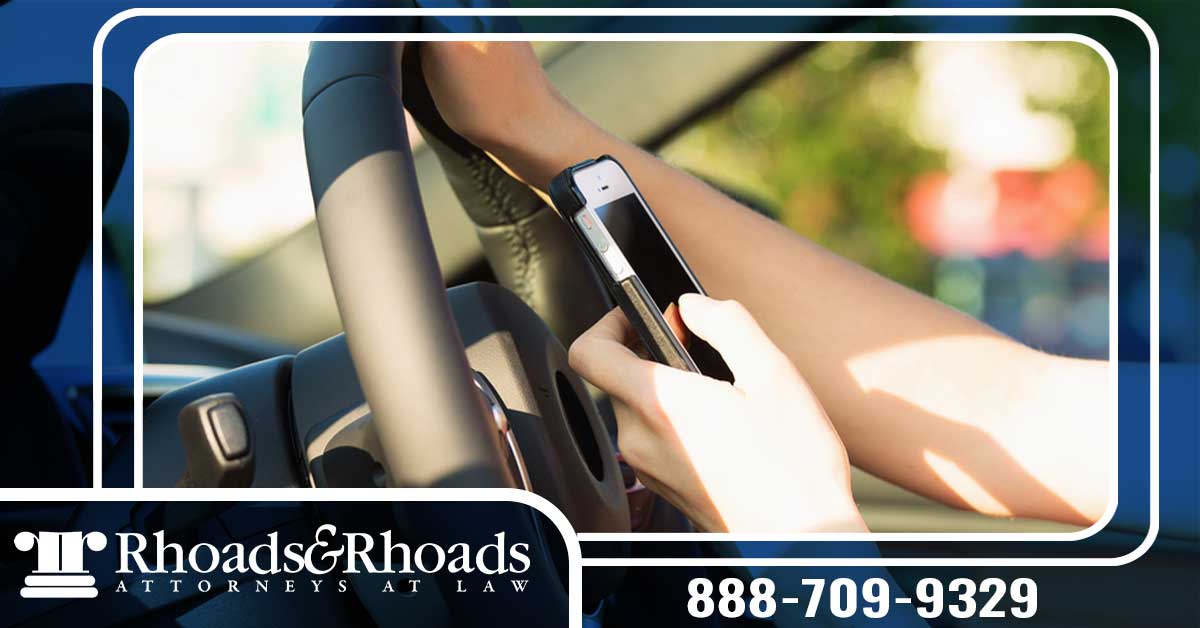
Driving while distracted is one of the leading causes of devastating accidents. According to the National Highway Traffic Safety Administration (NHTSA), there were 3,308 distracted traffic fatalities in the United States in 2022, and hundreds of thousands suffered from injuries because of this reckless behavior. Many preventable distracted driving vehicle incidents involve cell phone use, such as drivers texting and making phone calls.
Those impacted in these injury crashes may struggle with overwhelming medical bills and other expenses, as a car accident can cause you to sustain any number of injuries.
If you experienced a vehicle crash caused by driver distraction, you shouldn’t have to pay out-of-pocket for property damage and medical expenses from car accidents. In the event your Kentucky no-fault insurance coverage doesn’t cover everything, you can file a personal injury claim against the distracted driver.
For experienced legal guidance in the Bluegrass State, contact Rhoads & Rhoads, P.S.C. Attorneys at Law. Our skilled and dedicated attorneys specialize in handling car accident and personal injury cases.
Compensation for Distracted Driving Accidents
You’ll need to prove that the distracted driver was at fault for your vehicle accident to recover compensation. For that reason, your personal injury claim should include evidence corroborating that the other motorist either broke driving laws or acted negligently, leading to the car accident. The other driver had a duty to maintain focus behind the wheel, so they should be liable for expenses.
Common forms of evidence in distracted driving crashes include:
- Photos and videos
- Eyewitness statements
- The police accident report
- The distracted driver’s cell phone records
- The distracted driver’s social media activity
The amount of compensation you can recover in a personal injury claim or lawsuit is contingent on your losses. Personal injury claims are meant to reimburse injured victims for financial damages and pain and suffering, and your specific losses will determine your settlement amount.
Compensation for Distracted Driving Accident Injuries
- Property damage
- Past and future medical bills
- Lost wages
- Loss of future earnings
- Pain and suffering
- Loss of enjoyment of life
- Loss of consortium
Tragically, not all distracted driving victims can seek justice and damages — numerous Kentucky residents have died in fatal crashes caused by distracted drivers.
 Do you have a family member who was killed in a fatal crash? In Kentucky, a personal representative of your loved one’s estate can file a wrongful death claim against the negligent motorist. While only the representative may file a wrongful death claim, the decedent’s family is entitled to compensation. Also, a spouse or a minor child (under 18) can file their own individual loss of consortium claim after the death or loss of a family member.
Types of damages you may be able to recover for distracted driving fatalities or in a wrongful death claim or lawsuit include:
- Funeral and burial costs
- Loss of earning capacity
- Loss of financial support
- Loss of a parent
- Loss of consortium
- Pain and suffering
What Is Distracted Driving?
According to the Office of Highway Safety, distracted driving is a leading cause of motor vehicle accidents in Kentucky, and avoiding distractions is critical for your safety.
For an action to be considered distracted driving, it must take the driver’s attention away from the road. While most people are aware of the risks of cell phone use behind the wheel, many forms of distracted driving are incredibly hazardous, such as eating, self-grooming, or handling a GPS device. Even a passenger can be a serious liability if they distract the driving motorist.
If a driver’s eyes are off the road for even 3.5 seconds while driving 60 miles per hour, it’s like driving the length of an entire football field blindfolded. (A football field is 360 feet long! That’s far too long to take your eyes off the road.)
How can you reduce the risk of causing a distracted driving accident?
Avoid distractions at all costs when operating a motor vehicle, especially texting. Inattentive driving is never worth it. It’s best to turn off your phone notifications before you begin driving. That way, you won’t be tempted to engage in texting when receiving a notification for a text message.
Types of Distracted Driving
According to the Centers for Disease Control and Prevention (CDC), there are three main types of distracted driving:
Visual Distractions
Distractions that take the driver’s eyes from the road. Common visual distractions include texting or reading texts, looking at a GPS navigation device, and looking at a passenger.
Manual Distractions
Distractions that take a driver’s hands away from the steering wheel. Some examples of manual distractions include eating, drinking, texting, and adjusting a GPS navigation device or another electronic device.
Cognitive Distractions
Mental distractions that take a driver’s brain activity and attention away from driving. Common cognitive  distractions are listening to music and podcasts, talking to passengers, and daydreaming.
While other forms of inattentive driving are certainly dangerous and are a major factor in accidents, using a smartphone is especially deadly. Texting and utilizing a cell phone reduces your reaction time and greatly increases your likelihood of experiencing a crash. Sending a text message combines all three types of distracted driving, as it requires your eyes, hands, and mental attention.
Younger drivers are especially at risk of texting while driving because they are less experienced drivers and are more likely to engage in cell phone use behind the wheel.
Fortunately, Kentucky’s distracted driving laws forbid motorists from driving while using cell phones. Distracted driving laws prohibit drivers from texting and reading messages while their vehicle is in motion.
Using a cell phone while driving is often considered reckless driving, and a first offense will likely cost you four points against your license as well as a fine.
How Long Do You Have To File a Claim Against a Distracted Driver in Kentucky?
 In many cases, those who are injured or suffer losses from someone else’s negligence have one year to file a personal injury case. However, in cases where the injury occurs because of a motor vehicle like in driving distracted crashes, victims have two years from the date of the accident to file personal injury claims. However, even in motor vehicle cases where wrongful death occurs, claims for loss of consortium still only have a one year statute of limitations, and you will likely not be able to recover compensation if you wait more than a year.
Get started with your claim immediately. You’ll want ample time to gather evidence and build your case, so consider consulting a Kentucky personal injury attorney as soon as you can.
Common Distracted Driving Injuries
The average vehicle weighs around 4,000 pounds, so it’s not surprising that the impact of crashes can cause numerous types of injuries. While the majority of accidents involving distracted driving only cause minor or moderate injuries, a person driving distracted and not fully paying attention can potentially result in catastrophic or even fatal injuries.
The most common distracted driving injuries include:
- Traumatic brain injuries
- Spinal injuries
- Cuts and lacerations
- Contusions
- Fractures
- Soft tissue injuries
- Whiplash
If you’ve been injured in a collision caused by a motorist driving distracted, you should seek immediate medical attention.
Contact Rhoads & Rhoads for a Kentucky Distracted Driving Accident
Don’t wait to get started with your distracted driving legal case — get in touch with a Kentucky personal injury attorney. You can take the first step today by getting in touch with Rhoads & Rhoads,http://270-216-3902 P.S.C Attorneys at Law.
You can schedule your free consultation by calling our Kentucky office at 270-216-3902 or contacting us online here.
Common Questions and Answers About Distracted Driving Accidents in Kentucky
Can I obtain a driver’s cell phone records after a distracted driving accident in Kentucky?
Yes, you can obtain a driver’s cell phone records after an accident in Kentucky, but they generally cannot be accessed without legal intervention. An experienced personal injury attorney can issue a formal subpoena during the discovery phase of a lawsuit to compel the wireless carrier to release call logs, data usage, and text message timestamps from the time of the crash. This digital evidence is vital for objectively demonstrating that the at-fault driver was actively using a device when the collision occurred.
How do Kentucky courts determine whether texting caused a car accident?
Kentucky courts determine whether texting caused an accident by evaluating a combination of digital evidence, eyewitness testimonies, and forensic crash analysis. A critical factor involves aligning the exact timestamps of sent or received messages from subpoenaed cell phone records with the precise minute of the collision noted in the police report. Furthermore, under Kentucky’s negligence per se doctrine, a documented violation of the state’s texting ban (KRS 189.292) directly establishes liability as a matter of law.
What types of evidence can prove a distracted driving claim in Kentucky?
A distracted driving claim can be proven using multiple forms of direct and circumstantial evidence, including the at-fault driver’s cell phone logs, data utilization reports, and social media activity timelines. Claimants can also utilize police accident reports documenting traffic citations, dashcam or traffic camera footage, and statements from eyewitnesses who observed the driver’s inattentive behavior. Additionally, physical scene evidence like a total lack of tire skid marks can prove the driver failed to take evasive action before impact.
Can a distracted driving accident increase the value of my injury claim?
Yes, a distracted driving accident can substantially increase the value of your injury claim by locking in clear liability and protecting your settlement against reductions under Kentucky’s pure comparative negligence system. Moreover, if the driver’s distraction was exceptionally reckless—such as prolonged texting at highway speeds or scrolling social media in a heavy traffic area—it can open the door to uncapped punitive damages under KRS 411.184. These additional awards are designed specifically to punish gross negligence and deter similar conduct, which drastically elevates the total payout.
Are commercial truck drivers held to different distracted driving standards in Kentucky?
Yes, commercial truck drivers operating in Kentucky are subject to much stricter federal standards mandated by the Federal Motor Carrier Safety Administration (FMCSA) alongside state laws. Federal rules completely prohibit commercial motor vehicle drivers from texting or using any hand-held mobile devices while driving, imposing severe individual fines up to $2,750 and carrier penalties up to $11,000. Multiple offenses can lead to immediate commercial driver disqualification, and a violation provides clear, powerful evidence of negligence per se in an injury claim.
What should I do if I suspect the at-fault driver was using social media before the crash?
If you suspect the at-fault driver was using social media, you should notify your personal injury lawyer immediately so they can issue a spoliation letter demanding the immediate preservation of all digital records. Your legal team can then cross-reference subpoenaed cell phone data logs, app usage histories, and timestamped public or private social media posts to establish that the driver was actively engaged online at the moment of the collision. Securing this digital trail quickly is crucial, as social media posts and account activities can be easily deleted or altered after an accident occurs.
Can dashboard camera footage help prove distracted driving in Kentucky?
Yes, dashboard camera footage is highly valuable and legally admissible in Kentucky to help prove distracted driving by providing definitive visual proof of the timeline preceding the collision. Dashcam video can visually demonstrate erratic driving patterns like drifting across lanes without signaling, sudden speed changes, and a complete failure to apply brakes before impact. Furthermore, if the at-fault vehicle or nearby motorists have dual-facing or cabin cameras, the footage can directly capture the driver actively interacting with a smartphone or otherwise looking away from the road.
How often do distracted driving accidents result in serious or catastrophic injuries?
Distracted driving accidents frequently lead to serious or catastrophic injuries because inattentive drivers rarely attempt to slow down, brake, or take evasive actions prior to an impact. The extreme, unbraked kinetic force of these high-velocity collisions regularly inflicts life-altering physical trauma on victims, such as traumatic brain injuries (TBIs), severe spinal cord damage, internal organ punctures, and complex bone fractures. According to highway safety data, these devastating outcomes are significantly more common in distracted crashes than in standard collisions where drivers attempt to avoid the accident.